
Home Blog Page 3

AI agents for good? ITU’s AI for Good Global Summit 

0

A new wave of autonomous AI—capable of reasoning, acting independently, and scaling at unprecedented speed—is rapidly reshaping the technological landscape. The rise of “agentic AI” and powerful, low-cost AI models is making artificial intelligence cheaper, more widely available, and potentially more energy efficient—but also harder to regulate. With some prominent CEOs predicting human-level AI within two to three years, concerns are mounting over safety risks, weakened guardrails, and the challenge of responsible governance.

These pressing issues will be at the center of the AI for Good Global Summit 2025, the United Nations’ leading platform advancing AI in service of sustainable development, in Geneva, Switzerland from 8 to 11 July 2025. The expanded, four-day gathering will also showcase progress on advanced robotics, autonomous mobility, quantum computing, AI in space, and brain-computer interfaces. 

Organized by the International Telecommunication Union (ITU), the UN agency for digital technologies, the goal of AI for Good is to identify trustworthy applications of AI, build AI skills and standards, and strengthen global dialogue on AI governance for sustainable development. “As AI development accelerates, so does the urgency to keep innovation aligned with the Sustainable Development Goals,” said ITU Secretary-General Doreen Bogdan-Martin. “AI for Good is where the world comes together to ensure these technologies are safe, responsible, and leave no one behind.”

Tackling AI’s biggest questions

At the AI for Good Global Summit 2025, leading experts from governments, industry, academia, civil society, and the UN will explore how AI is reshaping our world, tackling urgent challenges such as safety, employment, sustainability, privacy, security, governance, and its broader societal and economic impacts.

Among the AI visionaries set to present are Geoffrey Hinton, AI pioneer and Nobel Prize winner; Yoshua Bengio, Founder and Scientific Director of Mila – Quebec AI Institute and Turing Award winner; Sasha Luccioni, AI & Climate Lead of open-source AI developer Hugging Face; and other prominent voices on AI. 

Acting on global AI priorities

Responding to the Global Digital Compact, adopted last year by the UN General Assembly, the AI for Good Global Summit 2025 will provide a global platform for dialogue to advance AI governance, standards, and capacity building. As AI adoption accelerates, the Summit aims to inform policies and drive solutions that ensure AI is developed and deployed responsibly, fairly, and for the benefit of all.​

Yet, a global AI governance gap persists—an ITU survey found that 55 per cent of Member States lack a national AI strategy, and 85 per cent have no AI-specific regulations. To address this, the Summit will host ITU’s second AI Governance Day on 10 July, focusing on safety, trust, international standards, and bridging the regulatory gap, while also tackling the urgent need to build AI skills and capacity, especially in developing countries.

On 11 July, the Summit will host an International AI Standards Exchange, bringing together leading global standards bodies to strengthen AI’s technical backbone, ensuring interoperability, safety, and inclusive standards development.

“ITU is driving the development of a trusted and interoperable AI ecosystem,” said Seizo Onoe, Director of ITU’s Telecommunication Standardization Bureau. “Our AI standards are supporting innovation in areas from network orchestration and energy efficiency to multimedia coding and content authenticity. Our International AI Standards Exchange will help keep up global momentum on the technical underpinnings of responsible AI.”

The newly established AI for Good Awards, presented in partnership with Tech To The Rescue​, will recognize groundbreaking AI solutions that contribute to global progress on sustainable development with categories including AI for People, AI for Planet, and AI for Prosperity. Applications for awards will open soon.

Combining the UN’s leading AI platform with the tech and development community

The AI for Good Global Summit is organized by ITU together with 47 partner UN agencies. The annual event, co-convened by the Government of Switzerland, is free of charge and open to everyone.

To find out more: Click here

To submit a release, contact us here.

How to Remove Unwanted Elements From Screenshots in 20 Seconds Without AI or Image Editing Tools

0

Remove Unwanted Elements From ScreenshotsIf you work in content or social media and you often have to take screenshots of other websites then you know how annoying it is when you come across a page with random obstructions. Whether its a giant banner announcing a seasonal sale, a popup window, a sidebar widget, or some awkwardly inserted Google ad – it doesn’t matter. The point is that you don’t want it there. You want a nice, clean image. Fortunately, there is a very quick and very easy way to do it. Here’s how.

Everyone Is Talking About DeepSeek AI, but Is It Really THAT Good? I Tested It Against GPT-o1 and Claude

0

DeepSeek R1The new DeepSeek R1 model from China launched last week. If you’re into AI or even into technology more broadly, it was hard to miss the news. Everyone was talking about it. But it’s not just that. It’s the way everyone was talking about it. I was left with the impression that DeepSeek is going to drive a stake through the heart of OpenAI and Anthropic.

The Real AI Threat Isn’t Coming – It’s Already Here: 3 Cases of Algorithms Destroying Lives

0

The Real AI ThreatWhile the web buzzes with anxiety about AI taking our jobs or achieving consciousness, real artificial intelligence systems have already been making life-altering decisions about healthcare, housing, and basic human rights – often with devastating consequences.In this article I’m going to examine three real-life cases where AI systems destroyed thousands of lives. Then I’ll share my opinion on what we can do about it.

The Rise of “GEO” – or How AI is Transforming Search Engine Optimization

0

the rise of GEOIf you’ve used Google lately, you’ve probably noticed a change: instead of just getting a mix of links and snippets, you’re now seeing AI-generated responses that synthesize information from multiple sources right there in your results. This is what’s known as generative search and it’s changing how we optimize content for search engines. In this post, I’ll explain how traditional SEO differs from GEO and where the concept of GEO originated from. Then I’ll go over some best practices so you can improve your odds of getting featured in generative search results.

How the Holidays Are Shaping Web Traffic Trends (and Why You Should Care)

0

How the Holidays Are Shaping Web Traffic TrendsHappy almost-2025, everyone! While you’re finishing up your year-end to-do’s (or wishing you had started them earlier), I’ve been diving into some fresh data published by Cloudflare. This time, they’ve looked at how people around the globe have been spending their time online during the holiday season – between Christmas and the New Year. As it turns out, when the feasting starts, the web often takes a back seat.


Introducing Roblox + Parent Privileges: Guide Your Child’s Digital Play

0

Roblox has captivated millions of kids worldwide, becoming a staple in online play and creativity. However, it hasn’t been without its challenges. Over the years, concerns have been raised about child safety, including instances of inappropriate content and interactions that parents need to be aware of. Roblox’s team has taken steps to address these concerns, including stricter content moderation and enhanced parental controls. One of the most significant recent updates is the addition of a 17+ content category, designed to better separate mature experiences from those suitable for younger audiences.

With this in mind, Roblox’s new account feature for parents is a welcome move toward safer, more transparent digital engagement for families. Here’s what you need to know about Roblox accounts with parent privileges, how they work, and what they mean for your digital parenting strategy.

What Are Roblox Accounts with Parent Privileges?

This new type of account gives parents more oversight and control over their child’s Roblox activity without needing to access their child’s device. With parent privileges, you can:

  • View and update parental control settings for your child from your own account.
  • Access usage insights, including daily screen time and on-platform friend lists.

This feature helps parents stay informed and involved, addressing safety concerns while enabling kids to explore, create, and play in a supervised environment.

A Shift in Content Maturity Settings: What’s New?

As part of its ongoing effort to improve transparency and content safety, Roblox has introduced changes that impact both parents and users:

  • Introduction of a 17+ category: To better categorize and control mature content, Roblox has added a 17+ category for experiences that may include more intense themes and interactions. This allows parents to prevent younger users from accessing content that is not suitable for their age group.
  • Experience Guidelines are now called Content Labels. These labels describe the type of content found in an experience, helping parents understand what their child might encounter.
  • Adjustable Content Maturity Settings. Parents can set content limits based on these labels, allowing for more tailored content control.
Updated Default Settings for Kids Under 13

To better protect younger users, Roblox is rolling out updates to default account settings:

  • Chat limitations for users under 13: Certain chat features will be more restricted to minimize exposure to potential risks.
  • Parental permissions for users under 9: Kids in this age range will need parent approval to access experiences labeled with “Moderate” content, which could include moderate violence or humor.

These changes help ensure that the platform stays age-appropriate and aligns with Roblox’s goal of providing a safe, creative environment. Parental controls will also evolve as kids grow, with updates to settings based on age milestones. Both you and your child will receive notifications before these updates are applied, keeping everyone in the loop.

Don’t Miss Out: Link Your Roblox Account Today

A critical change parents should be aware of is the phase-out of the parent PIN feature. This means parents can no longer set or use a PIN to manage their child’s account settings or receive account notifications via their parental email.

How to Set Up a Roblox Account with Parent Privileges

To maintain your access to important notifications—such as account spending alerts—you’ll need to set up and link your Roblox account with parent privileges:

  1. Sign in to your child’s Roblox account.
  2. Navigate to Settings and select Parental Controls.
  3. Follow the prompts to link your parent account.
  4. For comprehensive guidance, visit roblox.com/familycenter.

Previous settings managed through a parent PIN will remain unchanged, but any future updates will require the new account setup.

Strengthen Your Child’s Account Security

While these updates offer more control, account security remains paramount. Existing parental emails will still be valid for account recovery, and we strongly recommend enabling 2-factor authentication to add an extra layer of protection to your child’s account.

Why This Matters

Parenting in the digital age is complicated. While Roblox continues to enhance safety and parental controls, parents must remain proactive in their children’s online activities. The addition of parent privileges and 17+ content restrictions provides more tools for parents to guide their children responsibly through the online world. These updates are designed not just to protect, but also to empower families to navigate the platform safely.

Roblox’s efforts are part of an ongoing journey to make digital play safer and more enjoyable. For parents, this means easier oversight and better peace of mind.

Ready to set up your Roblox account with parent privileges? Head over to roblox.com/familycenter to start.

To submit a release, contact us here.

Call. Record. Transcribe. Time Hack.

0
Photographer

Life gets easier and faster every day. We’re productive to the point of overwhelm sometimes. But, truth be told, some tools can save you hours. Over the last few years, we hopped across to Zoom calls or Meets, and then we added transcription tools too.

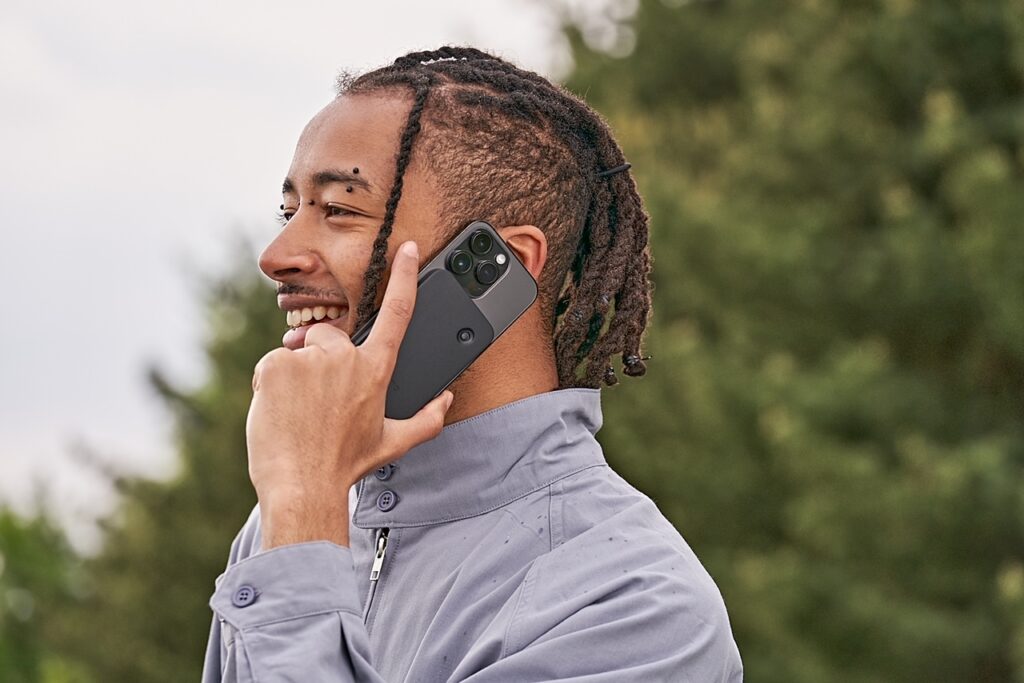
But what if that all-important phone call comes when you’re on the move? This might be a briefing or an interview, and you have to capture verbatim insights, quotes or instructions. As a journalist or content creator, maybe a lawyer – in fact, anybody that needs to record important calls – you need that detail exactly as it was shared with you.

That’s where the Magmo Pro comes in—swooping in like a gadget superhero to save your interviews, podcast episodes, or whatever deep, philosophical chats you’re having on the phone these days. Need a video explainer, start here?

As someone who lives for tech that makes life easier (and a bit more fun), I have a serious soft spot for devices that work the way you expect them to. I’m talking about that sweet combo of simple setup, smooth usability, and a dash of “oh, that’s clever.” The Magmo Pro totally fits that vibe, especially for those of us in the journalism and content creation game.

A Glimpse at the Original Magmo

Let’s rewind for a second. The original Magmo? It hooked onto the back of your iPhone via MagSafe—no weird cables or bulky attachments, just a nice, sleek addition that turned your phone into a recording powerhouse. Hit one button and—bam!—you’re recording your call. Super easy. And, with 32GB of storage, there was enough space to stash up to 500 hours of recordings. Unless you’re having three-hour podcasts every day (you’re not, right?), you’re probably good for a while without worrying about storage space. However, the OG Magmo had to evolve. Tech never stops evolving.

Magmo Pro to the Rescue: A User Experience That Works

Enter the Magmo Pro: smarter, smoother, and with a serious upgrade in user experience. The first thing to love? Bluetooth connectivity. No more plugging your phone into your laptop like it’s 2010. Instead, the Magmo Pro syncs with your iPhone via Bluetooth, and—drumroll—there’s now a mobile app to handle all your recordings. This is huge.

I’m a sucker for good UI (user interface), and the Magmo Pro app delivers in spades. It’s not flashy, but it’s efficient. You can see all your recordings in one place, neatly labelled with caller ID, date, and time stamps. Finding that one interview from Tuesday afternoon no longer feels like a scene from “Mission: Impossible.” Instead, you scroll, tap, and there it is—like magic, but for call recording.

The app doesn’t just help you organize, either. You can play back, delete, and even share recordings directly from the app. Sharing is particularly handy when you’re on deadline and need to send audio to an editor or a colleague. And let’s be honest—half of us forget to delete old files until our devices start gasping for storage. Magmo Pro makes it so easy to clear out what you don’t need that you might actually do it.

The Beauty of Storage (aka No More Panic Deleting)

Speaking of storage: 32GB might sound like a decent chunk, but if you’re like me and like to hoard interviews “just in case,” you know how quickly space can vanish. That’s why I’m impressed with how well Magmo Pro handles storage. The 500 hours of recording time means you don’t have to obsessively delete files after every call. It’s like having a bottomless pit for your audio files but in a good way. You can just let them live there until you’re ready to deal with them.

Recording Quality and the Piezo Sensor Magic

Let’s talk about call quality for a minute. I’m picky about this because if you’re going to record a call, it had better sound good. Otherwise, what’s the point, right? The original Magmo had a pretty nifty Piezo sensor that picked up vibrations from your phone to record audio, and I’m happy to report that Magmo Pro sticks with this tech. What that means is you get crystal-clear audio without the background hum of whatever café or newsroom you happen to be in. The sensor isolates the phone’s sound and filters out the unnecessary stuff, so you get clean recordings even in less-than-ideal environments. Nice.

Pairing Magmo Pro with Transcription Software (Your New Best Friend)

Now, here’s where things get really fun. If you’re doing interviews regularly, you’ll love this: Magmo Pro pairs ridiculously well with transcription software. Personally, I use FireFlies.AI, and the workflow is a dream. After recording a call, you can upload it directly to FireFlies, and within minutes—boom, full transcript. It’s fast, accurate, and such a time-saver that I’ve started wondering how I managed before.

Seriously, imagine sitting down after an hour-long interview and not having to listen back to the whole thing to find key quotes. It’s all there, text and timestamps, ready to go. You’ve just saved yourself at least half an hour, if not more. I’ve also used Otter.ai with great results, and the beauty of Magmo Pro is that the files are easy to export and upload to whatever tool you prefer.

Final Thoughts: Efficiency Meets Simplicity

Magmo Pro isn’t here to complicate your life. It’s here to make things easier, faster, and more efficient. Whether you’re a journalist who needs to capture interviews on the go or a podcaster who wants clean, easy-to-manage audio, this device just works. The improvements—Bluetooth connectivity, the app for managing recordings, and the overall ease of use—are exactly what the original was missing.

It’s not about selling you a gadget; it’s about loving a gadget that does what you need it to do—and does it well. And if you’re pairing it with AI tools for transcription? Well, congratulations—you’ve officially levelled up your workflow.

Instagram: https://www.instagram.com/magmo_mune/

To submit a release, contact us here.

Can kids have a screen-free childhood? Really?

0
Four children running barefoot in a park

Introduction

Smartphones and social media have become inescapable parts of our children’s lives. But as their screen time increases, so do concerns about the impact on their mental health. According to experts like Professor Jonathan Haidt, social media is a significant contributor to rising levels of anxiety, depression, and loneliness in teens. The evidence is mounting, and it’s clear that schools and parents need to take action before it’s too late.

The Real Cost of Social Media on Mental Health

Social media is more than just a way for kids to connect; it’s also become a major source of anxiety and self-doubt. Currently, there is huge attention globally on Jonathan Haidt’s research, his 2024 book ‘The Anxious Generation’, and his proposal for a ‘screen-free childhood’, which highlights how platforms like Instagram and TikTok fuel harmful behaviours, particularly among teenage girls, who are most susceptible to the pressures of comparison and seeking online validation​.

Dean McCoubrey, MySociaLife founder, warns that “we’re watching a significant number of this generation (GenZ) struggle with mental health issues, yet we’re not taking the necessary steps to guide them through the dangers of their digital lives.” Studies in Nature confirm that heavy social media use is strongly linked to rising levels of anxiety and depression in young people​.

Social media can amplify feelings of isolation, particularly when children and teens feel trapped in a cycle of chasing likes and approval. It’s a far cry from the innocent fun these platforms promise; ironic for a term which promotes socialising. That being said, another segment of the generation report benefits from social media, reaching out to friends and sharing concerns. The debate is complicated and layered.

Why Is It So Hard to Cut Down Smartphone Use?

If you’ve ever tried to limit your child’s screen time, you know how challenging it can be. Social media platforms are designed to keep users coming back for more, often using clever psychological tricks to trigger dopamine rewards. As McCoubrey puts it, “Our kids are stuck in a system that’s been engineered to hold their attention, making it harder for them to disconnect.” This constant stimulation makes social media highly addictive​.

Parents often need help figuring out where to start when it comes to setting boundaries. Schools, too, are grappling with how best to tackle the issue of digital safety, as many haven’t fully integrated this into their curriculums. Meanwhile, children are left to navigate a world where they’re bombarded with content designed to trigger emotional highs and lows. The Huberman Lab podcast has spoken at length about how this overstimulation can lead to sleep disruption and heightened anxiety in kids​.

What Parents and Schools Can Do?

So, how can we help our kids regain control of their digital lives? The solution lies in a joint effort between parents and schools. Schools need to prioritise teaching digital citizenship, making sure that children understand both the benefits and the risks of social media. “Digital literacy should be treated as a key life skill,” says McCoubrey. “Our kids are living their lives online, so it’s crucial they know how to manage it.”

At home, parents can help by setting clear, realistic boundaries. Yes, some schools or parents can and will ban smartphones, but not the majority, so we still need kids to learn healthier habits. For instance, introducing tech-free times, like during meals or before bed, can make a big difference. Encouraging children to spend more time engaging in real-world activities—whether it’s sports, hobbies, or just hanging out with friends—will help them see that there’s more to life than what’s happening on their screens.

Conclusion

We’re living in a digital age, and smartphones aren’t going anywhere. But that doesn’t mean we have to accept the damage they’re doing to our kids’ mental health. Schools and parents have a responsibility to teach children how to navigate the digital world safely and healthily. By acting now, we can help protect their well-being and ensure they grow up equipped to handle the challenges of both the online and offline world.

To submit a release, contact us here.

Behind The Doors Of An African Explorer’s Private Retreat

0

Luxury travel presents in many forms. Some of us yearn for the predictable while others desire a challenge, to expand our perspective. Travel is always an education, wherever you go. Before you embark on your adventure, each and every time you will make an informed choice on how much expansion, interaction, education, and comfort you feel for. 

As importantly, those you encounter leave an impression on you, themselves well traveled and delivering a lens that offers another dimension. 

Owned and lived in by Geraldene for the past 17 years, Sophia’s Retreat on the North Coast of Durban, reflects her adventurous spirit as an African explorer. Every corner of the space tells a story, shaped by her extensive travels across the continent and beyond.

From the moment you step through the intricately carved door—a piece that sparked the creation of the entire home—you know this isn’t your typical coastal retreat. “I found this magnificent door and then decided to build a house around it,” Geraldene shares as we walk through the entrance. The door is the first of many eclectic treasures that fill the space. Carvings, driftwood, African art, retro collectibles, and iron sculptures are scattered throughout, each representing a chapter of Geraldene’s journeys.

This is not for those seeking predictable, polished luxury. It’s for guests who appreciate a bold, unconventional space where African influences and subtle hints of Indonesia come together. The mounted taxidermy and African skins are central design elements, offering an unfiltered reflection of the owner’s love for the wild and untamed. It’s a statement that may not appeal to everyone, but for those drawn to this eclectic aesthetic, the home offers a captivating experience.

The view is one of the standout features. From the balcony, the eye is drawn to the vast canopy of trees that extends to the horizon, with the distant sea forming a blue line just above the greenery. The rim-flow pool, perfectly positioned on the elevated wooden deck, invites you to relax and take it all in. It’s a place to sip a drink, gaze out over the treetops, and feel connected to the natural surroundings. A vast fireplace brings the evenings to life, as you settle into deep button velvet sofas. 

What truly sets this property apart, however, is the way it blends its interior with the outdoors. You’re greeted by a breeze that flows effortlessly through the home, creating a seamless connection between the inside spaces and the surrounding landscape.

Inside, the home is designed for entertaining and sharing. However, the upstairs king en-suite, with its balcony and commanding view, feels like a private chamber, the only bedroom not on the ground floor. The property sleeps 12 in total, with four additional en-suite bedrooms and a self-contained flat that’s perfect for family or friends.

Geraldene’s passion for collecting is evident not just inside but also in the garden. Ponds, fountains, and trickling streams create a meditative space, offering moments of quiet reflection.

It is most definitely the lounge, bar, and entertainment area that draw a gathering with family and friends. Two bar fridges, an ice machine, a Nespresso machine, infrared heaters, Bluetooth surround sound, and a braai ensure that guests are well-equipped for a good time. Pets are even allowed, with prior approval, adding to the home’s welcoming nature.

The mix of styles, the bold African décor, and the unpredictable blend of retro and antique pieces will resonate with those who embrace a unique personality and an unconventional and curious story. It’s a space that reflects its owner’s love for adventure, culture, and the natural world, offering a journey that’s as intriguing as it is comfortable.

To submit a release, contact us here.