
Discover the latest email marketing statistics including email marketing ROI, email performance by industry, conversion rates and much more.
8 Best WordPress Training Courses for Beginners in 2024
WordPress is a powerful content management system (CMS) that pretty much anyone can use to make a stunning, custom website. But, if you’ve never used the platform before, there’s a bit of a learning curve. In this post, we’re going to share eight of the best WordPress training courses for beginners.
Complete Tutorial: How to Build a Membership Site on WordPress
Creating a membership site on WordPress can be valuable to your new or existing business. In this tutorial, we’ll introduce the tools you’ll need to create a membership site on WordPress, and show you how to set them up.
Youthquake: Marketers, brace yourselves for GenZ

by GenZ Marketing Expert and Commentator, Dean McCoubrey.
If you’ve ever watched a rally (no, not political), you’ll probably remember the wide-eyed unpredictability of every turn, the careful observation of the navigator to manage the terrain, and the damaging cost of reading the road incorrectly.
As someone who owns a marketing agency, and also an education company that focuses on social media and gaming education, that’s what I think marketers are having to deal with at the moment. Moreover, the road ahead will only experience more wind, rain, gravel, mud and snow, in the forms of ChatGPT 5 and 6, AR, VR, XR, and fierce social competition and innovation. Buckle up.
Personally, teaching teens and pre-teens in schools on this very subject of platforms, apps, games and emerging technology, feels like being invited into an enclosure, sitting quietly, and watching a diversity of behaviours, in order to approach the pride and their cubs, having built knowledge and trust. It’s about asking and listening first; approaching second.
I’m not sure many brands quite get this.
In the explosive, dynamic landscape of modern marketing, the ground is shifting at breakneck speed. For marketers, keeping up with Generation Z (Gen Z) requires map reading where the contours and roads change in front of your eyes. The rules that have governed branding for decades are being challenged and rewritten on a weekly basis.

From Z to A
In true internet form, Google offers a wonderful lack of clarity on the date range of Gen Z. Mckinsey has it that it’s those born between 1996 and 2010. Gen Alpha, those born after 2010, are moving faster, especially when not monitored by their parents. What I see and hear is eye-opening, often sad, but still a privilege, as it provides me with a platform to mentor on media literacy, online safety, digital exploration and excellence. With each passing week, students redefine the norms of consumption, creativity, and self-expression. To truly grasp their essence, one must understand the seismic shifts catalyzed by the COVID-19 pandemic.
It’s hideous to still use the pandemic in an article, it feels so long ago, and the most exhausting thread in journalism. But in the world I work in, that very weird phase in our lives acted as a catalyst for digital acceleration extended far beyond the surge in e-commerce. It blew up a new era of short-form video and redefined the meaning of authenticity and self-expression. It lowered the age of access and boosted screen time exposure. It widened the gap between most adults and kids, a gap that many aren’t even aware of, because parents wouldn’t know what to look for. Just like some brands and their marketing partners. We experienced a YouthQauke that split the road in two: Those who are willing to accept the change and listen and learn, and those that think things are still largely the same.
Brands are faced with a generation that knows few boundaries when it comes to creativity and innovation. They’ll try things, daily, while brands are planning slowly, meticulously, and with caution.
With so much at stake for these companies, I understand that completely, but it creates a lag between them and their Gen Z audience. Mike Sharman stands out as someone who has a good feel for reactive and responsive creative work, innovating with concepts and campaigns fast.

Intuitive, not fearless
Gen Z is characterized by its fearlessness of technology – personally, I think it’s more about an intuitive use of devices and platforms – a somewhat stubborn or confident sense of adolescent self, and a voracious appetite for content. Unlike previous generations, they were born into a world of social media and self-publishing. They have never known a time when their lives were not on display on timelines and newsfeeds; they’re the most tracked in history, enjoying the least privacy of any teens that came before them. They’re the children of the algorithm.
In their quest for self-expression, Gen Z has become a powerful creative force. But that algorithm has shaped that creative expression. Channels such as TikTok, Shein, and Instagram Reels have become their canvases, enabling them to showcase their creativity and individuality.
The Marketer’s Dilemma: Bridging the Gap
For marketers, understanding Gen Z is a daunting challenge. Traditional approaches to brand promotion, especially those typically pitching hooks to old Gen Xers, can feel forced and inauthentic to this new cohort. Often parents and marketers shrug their shoulders, insisting “kids are immature and don’t know what they’re doing online.” Yes, kids lack emotional maturity, their pre-frontal cortex is not developed, education hasn’t prepared them for critical thinking, cybersecurity and mental health online, but the reality is that they remain online, consuming, and shaping a narrative – irrespective of whether they should be. It won’t be changing, I can assure you.
If their current consumption will only get deeper and wider, guesswork will be the enemy of any marketer. The solution will lie in dynamic tracking and social listening. Brands will need to demonstrate humility and assume nothing. They must also seek out partners who have their ears to the ground and understand the Gen Z landscape intimately. And, in my view, they will need to be way, way more responsible in their marketing – both in what they market and the ethics of their approach. That’s another article altogether.
Staying Ahead in the Gen Z Era
To succeed in the Gen Z era, brands must be agile and adaptable. Here are the key takeaways for staying at the forefront of brand marketing to youth:
1. Authenticity Over Assumption: Gen Z values authenticity above all else. Brands must tell genuine stories and craft real experiences.
2. Embrace Creativity: Encourage Gen Z to co-create content and contribute to brand narratives. Their creativity knows no bounds.
3. Stay Informed and Adaptive: The digital landscape evolves rapidly. Brands should invest in staying informed about the latest trends and shifts within Gen Z culture.
4. Engage in Meaningful Conversations: Create spaces for authentic conversations with Gen Z. Understand their concerns and interests, and respond accordingly if you dare.
5. Champion Causes: Brands should actively support causes and initiatives that resonate with their values.
6. Rewriting the Language: The lexicon of youth culture is ever-evolving. Brands must reimagine their language and messaging to stay relevant.
Navigating the road ahead
Gen Z’s impact on brand marketing is undeniable, unstoppable and rising faster with every click and download; every purchase, every game, and every chat. Most importantly, they’re shaping brand success with every rand they spend and persuade their parents to spend. The Gen Z wallet will make or break brands as each year passes. According to YDx Youth Dynamics research, it’s R303 billion that SA’s youth currently spend and influence. What will it be next year, and in 20230?
Tune in.
And good luck.
Article by Dean McCoubrey published on Business Live: Original here.
Dean is owner of storytelling agency MediaWeb Group, youth marketing consultancy, GenZA, and teen digital education company, MySociaLife.
For more information: www.mediawebgroup.co.za and www.mysocialife.com
The DJI Osmo Mobile 6 Review: More Mojo!
Introducing Quick Launch and Enhanced ActiveTrack for Effortless Storytelling
As a tech and gadget reviewer, I had the privilege of attending DJI’s recent event on Bree Street – an evening of creative inspiration showcasing the latest products and some breathtaking work from world-class creators. Having previously owned an Osmo2 and an Osmo+, it was hard to hide my glee as I generously received the new DJI Osmo 6 to review. From the unboxing, I was immediately struck by its weight and the impressive updates to its structure – including a metallic phone clip, a tripod stand, and more.
My first assignment with the Osmo Mobile 6 was a luxury travel story for Luxury Travel Editors, focusing on various aspects of a recently re-launched five-star property, LUX Belle Mare, on the East Coast of Mauritius. The device didn’t disappoint. It was quick to pick up and use, offering the flexibility to work with various camera and video apps or within DJI Mimo. The end result was not just a gadget; it was an embodiment of portability, flexibility, enhanced features, and a remarkably smooth glide.
In a world where every moment is worthy of preservation, DJI, the world’s foremost innovator in civilian drones and creative camera technology, has unveiled the Osmo Mobile 6. This pocket-sized, portable marvel unlocks the full potential of your smartphone’s photos and videos, empowering you to become a masterful content creator. The Osmo Mobile 6, the latest entrant in the esteemed Osmo Mobile series, is brimming with cutting-edge features, including Quick Launch and ActiveTrack 5.0, designed to ensure that you capture every detail with seamless ease.
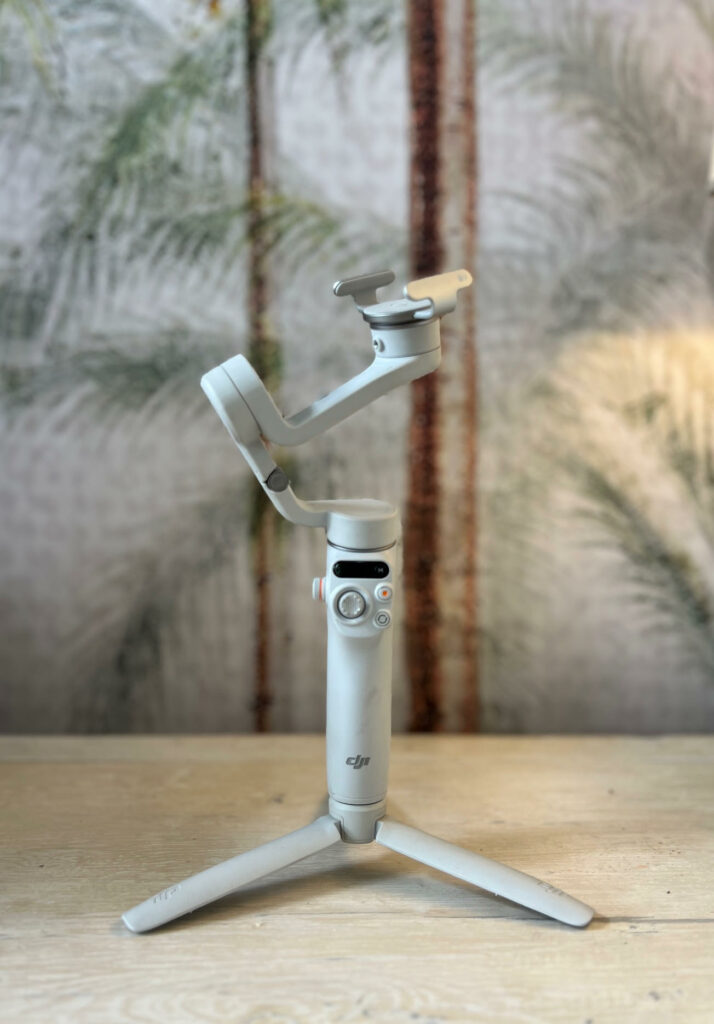
Portable and Compact:
One of the standout features of the Osmo Mobile 6 is its portability. Building on the success of its predecessor, the OM 5, it boasts a fresh ergonomically designed handle and a larger clamp, capable of accommodating even the bulkiest phone cases. Weighing just over 300 grams, it effortlessly slips into your pocket, making it your ideal travel companion. Additionally, the built-in extension rod empowers you to capture perfectly framed selfies and explore unique angles, including those captivating low-to-the-ground shots.
Steady and Ready:
The Osmo Mobile 6 boasts three robust motors and DJI’s advanced algorithms, ensuring that your smartphone remains rock-steady while capturing photos and videos. It is your go-to device for preserving fast-paced action, whether you are globe-trotting with mates, exploring the city, or witnessing a child’s first sporting event. In contrast to the electronic image stabilisation found in smartphones, which may falter during dynamic movements and low-light scenarios, the motorised stabilisation of the Osmo Mobile 6 guarantees clarity in every frame.
In the Blink of an Eye:
In the world of photography, moments can be fleeting. DJI recognises this, and hence, they have introduced the Quick Launch feature for iPhone users with the Osmo Mobile 6. Unfolding the device and attaching your iPhone triggers the Mimo app instantly, significantly reducing the time required for preparation. You can transition from pocket to shooting mode three times faster than with previous models, ensuring that you never miss a shot.
Stay Locked On:
The Osmo Mobile 6 elevates tracking to a whole new level with ActiveTrack 5.0, offering stable tracking at longer distances while enabling the front camera to track subjects even when they pivot or spin. Whether you are camping, travelling, or capturing street scenes, your footage takes on a captivating narrative with the gimbal ensuring your subject remains the focal point.
Intuitive Control:
Switching between the Osmo Mobile 6’s four gimbal modes has never been simpler. The built-in status panel and Mode button fast-track checking the battery level and selecting the perfect mode for your shot:
- Follow: Ideal for shooting upwards, downwards, or diagonally.
- Tilt Lock: Perfect for horizontal shots or moving around a subject.
- FPV (First Person View): Excellent for dynamic filming of still subjects like landmarks or statues.
- SpinShot: Create dynamic footage with ease, including push, pull, and high-angle shots.
Control at Your Fingertips:
The Osmo Mobile 6 introduces the Side Wheel, enabling you to effortlessly control zoom and focus. This smooth, responsive wheel allows you to adjust the focal length for flexible compositions and achieve a cinematic look with manual focus control.
Intelligent Features:
To enhance your content creation, the Osmo Mobile 6 includes intelligent features such as Timelapse, DynamicZoom, Gesture Control, Panorama, and Story Mode. These features empower you to create stunning and unique videos, whether you’re a seasoned pro or embarking on your content creation journey.
Comprehensive App Ecosystem:
DJI provides two powerful apps, DJI Mimo and LightCut, to guide you from shooting to editing. DJI Mimo offers tutorials and shot recommendations, while LightCut features AI-powered one-tap editing and exclusive video templates, ensuring your content shines from start to finish.
Pricing and Availability:
The DJI Osmo Mobile 6 is available for R3499 at the time of writing (but will fluctuate due to the dollar and various online merchants) and includes a magnetic clamp, tripod, power cable, and storage pouch.
As the owner of a mobile reporting hub, JournalismWeb, the DJI Osmo Mobile 6 has the potential to revolutionise (affordable) mobile journalism, smartphone photography and videography, making it accessible to everyone. With its unmatched portability, advanced stabilisation, and innovative features, it empowers you to effortlessly capture some of life’s memorable moments, ensuring your storytelling is magnificent and evocative down to the finest detail. Storytelling should be nothing less.
If you’re a business and would like to upload a media release, click here.
APP Review: ‘Voice Record Pro’

Simple and smart. Exactly what a journalist on-the-go needs.
In an era where digital tools dominate the world of journalism, the importance of efficient and reliable recording apps cannot be understated. Voice Record Pro by Dayana Networks is one such application that has caught the attention of many professionals in the field. This review aims to shed light on the features that make it stand out and elucidate why it’s an invaluable asset for journalists.

1. Intuitive User Interface
Firstly, a glance at the Voice Record Pro immediately highlights its user-friendly interface. Journalists, often working on tight deadlines, require tools that are straightforward and uncomplicated. This app delivers precisely that. The main controls for recording, pausing, and stopping are easily accessible, ensuring that users don’t miss critical moments during interviews or field recordings.
2. Advanced Recording Formats and Quality
Audio quality can make or break an interview recording. Journalists don’t always have the luxury of recording in quiet, studio-like environments. Voice Record Pro offers a wide range of audio formats and quality settings, including MP3, WAV, and AIFC. This range allows journalists to choose the best format for their needs, ensuring clarity and reducing background noise.
3. Editing Capabilities
After recording, journalists often need to trim audio clips or enhance certain parts for clarity. The built-in editing suite in Voice Record Pro is a boon in this regard. It enables cutting and trimming audio files without the need for external software. The editing features give journalists the flexibility to polish their recordings to perfection.
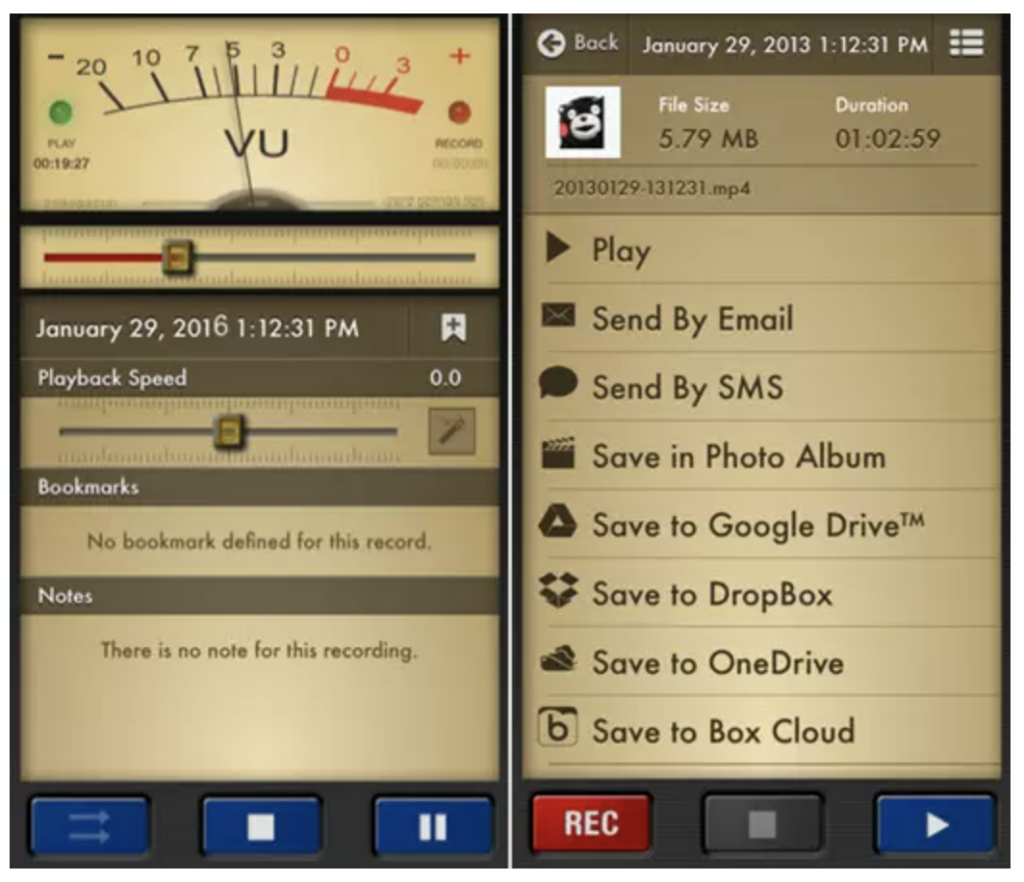
4. Efficient File Management
Voice Record Pro doesn’t just stop at recording and editing. It offers comprehensive file management features, allowing users to organise their recordings, add notes, and even include photos. Such capabilities are crucial for journalists juggling multiple stories simultaneously, helping them keep track of interviews, sources, and related files.
5. Cloud Integration and Sharing
In the digital age, the ability to store and share files seamlessly is a necessity. Voice Record Pro integrates seamlessly with popular cloud services like Dropbox, Google Drive, and iCloud. Journalists can upload their recordings directly, ensuring they have backups and easy access from any device. Additionally, sharing options allow them to send files to editors, producers, or fellow journalists with ease.
6. Security Features
Journalistic work often involves sensitive information. Protecting sources and ensuring confidentiality is paramount. Recognising this need, Voice Record Pro provides password protection and touch ID support. Such security features provide an added layer of protection, giving journalists peace of mind when storing or sharing recordings.
7. External Microphone Support
While most smartphones today come with decent built-in microphones, there are instances when an external microphone becomes essential for capturing high-quality audio. Voice Record Pro supports external microphones, allowing journalists to elevate their recording quality when the situation demands it.
8. Transcription Services
An often-overlooked feature, but immensely valuable for journalists, is the ability to transcribe recordings. While Voice Record Pro itself doesn’t offer built-in transcription, its compatibility with various transcription services ensures journalists can get their interviews or notes converted into text format efficiently. This saves valuable time and effort in the reporting process.
Conclusion
Voice Record Pro by Dayana Networks is more than just a recording app. It’s a comprehensive tool designed with the needs of journalists in mind. From its user-friendly interface to its robust editing and sharing capabilities, it proves to be a one-stop solution for audio recording needs in the field of journalism.
In an industry where accuracy, efficiency, and reliability are key, Voice Record Pro emerges as a powerful ally. By eliminating the need for multiple apps or tools and centralising the recording process, it ensures that journalists can focus on what they do best: telling stories that matter.
To all journalists looking for a reliable audio recording solution, Voice Record Pro is undoubtedly worth exploring. It’s not just a recording tool; it’s a game-changer in the realm of digital journalism.
If you’re a business and would like to upload a media release, click here.
Why Namibia can be Africa’s next ‘Dubai’

By Elvis Mboya
Namibia can rapidly transform from a third world economy to be one of the most competitive countries in Africa and a global commercial hub, to mirror the United Arab Emirates (UAE), taking into account their similarities – if it can adopt UAE’s economic growth strategies.
In the process, Namibia’s sleepy coastal cities such as Walvis Bay and Swakopmund can transform to be like UAE’s global finance and tourism hub – Dubai. Remember, it took Dubai barely 20 years to develop from a sparsely populated desert country founded 50 years ago, that depended on fishing along its vast coastline, to a top global investment and tourism destination.
It’s worth noting that the UAE and Dubai didn’t develop rapidly because of the discovery of oil, but because the Arab nation, whose Islamic neighbors are religiously conservative, genuinely opened up its doors to eligible foreign investors to live and work there, in the process, contributing immensely to the rapid growth and development of the UAE and its jewel, Dubai.
The UAE isn’t alone. Over the years, foreigners have immensely contributed to the development of the first world countries in North America and Europe. For example, the global superpower USA was built by foreigners, whether from Africa or Europe.
The UAE’s foreign population totals 88.52% (i.e. 9.0 million) while the nationals amount to 11.48% (which is 1.17 million), as her government seeks to bring in more job opportunities for natives in all economic sectors.
The weakest links
Today, Namibia, just like UAE twenty years ago, a sparsely populated desert country, with equally vast coastline for fishing and tourism and huge deposits of mineral resources underneath, mirrors the UAE 20 years ago, when the then developing Arab nation had nothing but a sea with fish, a huge coastline, sparsely populated desert country with high unemployment rate.
Namibia, with a population of about 2.5 million and a land size nearly twice the size of Kenya with a population of over 50 million people, clearly sits on a goldmine: huge deposit of precious rare earths such as Diamond and Uranium, youthful population, beautiful weather and gorgeous beaches, its strategic position to connect trade across the Atlantic and an entry point into SADC. Actually, the well-established infrastructure and resources gives Namibia a huge head-start to develop.
However, Namibia suffers from a very low population of 2.5 million people, with 1.6% growth rate, meaning the country’s population will remain below 10 million in the next 70 years, unless there’s a rapid and radical change.
This is probably Namibia’s weakest link, since most investors are attracted to populous countries, where numbers translate to affordable labour and ready market for their products or services.
Secondly, eventhough the country lacks sufficient skilled workforce and low population, Namibians are very overcautious and overprotective about foreigners coming in to fill the existing gaps, as the government continues to tighten screws on permits.
This is understandable since Namibia is one of the last African countries to attain independence (1990) after many years of brutal apartheid regime, still fresh in their minds, a cruel past that Namibians ought not to forget, but should learn from, move on and refocus on current economic realities and how their actions today will shape their future.
Unlocking the potential
For Namibia to unlock its full potential and be at par with the UAE twenty years from now, it doesn’t need to invent any wheel, rather to borrow from the UAE’s success story.
UAE/Dubai’s strategy is simple:
The country developed an investment framework which aims to make it easier for eligible foreign investors to set up and run companies 100% owned by non-residents in specific economic zones. The company needs only to obtain an operating license and a commercial registration certificate.
Eligible foreigners who want to set up a business outside of a free zone have to partner with a local entity. UAE citizens must own 51% of the joint venture and receive an annual fee or share of the profit.
In addition, eligible foreigners are entitled to visa free entry into the UAE for periods of up to 12 months, allowing investors to travel back and forth whenever needed. Project owners can stay in the UAE for up to five years without having to renew their visas, while top foreign students are allowed ten years stay after graduation.
UAE also offers attractive policies, minimal bureaucratic procedures, ease of licensing and flexibility aimed at maintaining and fostering the growth of the business sector.
Lastly, the UAE government doesn’t levy any personal tax or capital tax for both UAE citizens and foreigners. As a result, there is no special taxation regime for expat workers in the UAE, as they are treated the same way as citizens when it comes to personal or capital income tax. Instead, its government relies on a combination of oil revenues and other sources of income to sustain its operations.
UAE’s sacrifices have paid off. With 14 million visitors last year alone, its tourism boom is not only driving economic growth but also creating employment opportunities, which by the end of 2023, is projected to result in over 758,000 individuals employed in various travel and tourism roles alone, aside from thousands of jobs created by diverse industries established by the foreign residents.
In the process, the once sparsely populated desert country has instantly solved its low population crisis by increasing more than ten times, from less than a million people to 11 million, has significantly reduced its unemployment rate to less than 3%, bolstered its economy to a whooping GDP of US$498 billion and Per Capita of $48,822 in 2023 – stamping its authority as a leading economy in the Middle East and one of the best destinations in the World.
The writer lived and worked in Namibia for a decade as a journalist, served at Kenya High Commission-Windhoek and is currently the Lead Convener and Brand Ambassador of the annual Namibia-Kenya Trade & Investment Conference. Email: elvis.mboya@yahoo.com
If you’re a business and would like to upload a media release, click here.
New Heights: Lux* Grande Baie
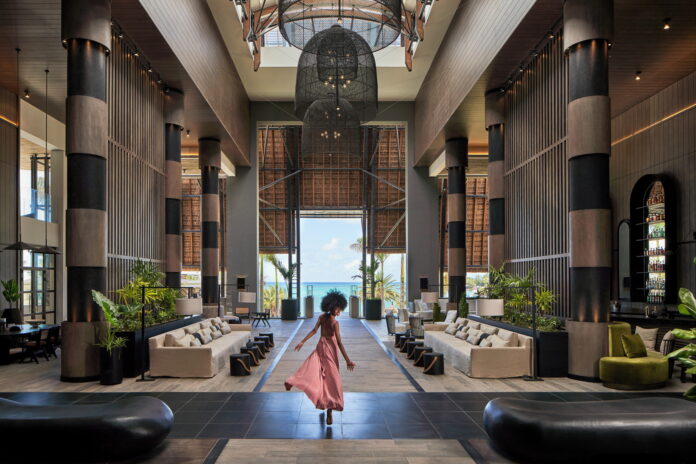
A fresh peak in modern travel
Digital acceleration has defined most of our lives since early 2020. The pandemic’s seismic, transformative shift completely stalled the travel industry, before forcing it into reinvention, compelling a handful of forward-thinking resorts and hotels to strike a balance between high-touch and high-tech experiences.
Furthermore, the pervasive influence of social media, particularly short-form video platforms like Reels, Stories, and TikTok, has given rise to the era of the “Instagrammable” hotel. While guests want to switch off, recharge, and connect with themselves and their loved ones, they increasingly seek a dual experience, making their holidays a visual diary, chronicling their journeys in real-time through platforms and screens. This phenomenon is particularly prominent among Millennials and Gen Z, whose significant spending power is influenced by their digital exposure and consumption. This new wave of travellers browse, consume, spend, socialise and learn aided by technology.
Intelligent intention
While the digital revolution plays an integral role in modern travel, adapting to the audience’s interests must be thoughtfully integrated with a clear sense of intentionality. Without that intelligence, brands risk being gimmicky. Luxury hoteliers have the enviable task of balancing how they understand and anticipate guests’ desires, while considering various dimensions — nature, experience, fine detail, sophistication, understatement, overstatement, sustainability and catering to personal technology preferences — to co-exist.

Leading the charge
On the edge of Mauritius’ most vibrant town, LUX* Grande Baie has taken this leap of faith into the future, effortlessly combining the allure of a beach holiday with urban hotelier genius. It’s unexpected from an island property. The resort offers both high-touch and high-tech experiences, making an immediate impression with its triple vaulted ceiling upon arrival, setting the stage for a truly extraordinary stay. Guests can straddle the spectrum of white sandy beach walks and waterskiing off a jetty to savouring cold-pressed coffee and patisserie at Maison LUX*, to haute cuisine, a nightclub, and a spa that would rival any on the media’s annual Hotlist winners.

Smart segmentation
LUX* Resorts astutely positioned LUX* Grande Baie as a beacon of distinction in its Indian Ocean portfolio, setting it apart from its sister properties, LUX* Grande Gaube’s luxurious homeliness, and the family favourite LUX* Belle Mare, reopening in October 2023.
As a five-star resort, it exudes a vibrant ambience, perfectly complementing the nearby buzz of shops and nightclubs. The resort’s own Beach Rouge poolside restaurant and bar, along with the AiKisu Asian restaurant, evoke an urban chic vibe reminiscent of a trendy Singaporean hotspot.
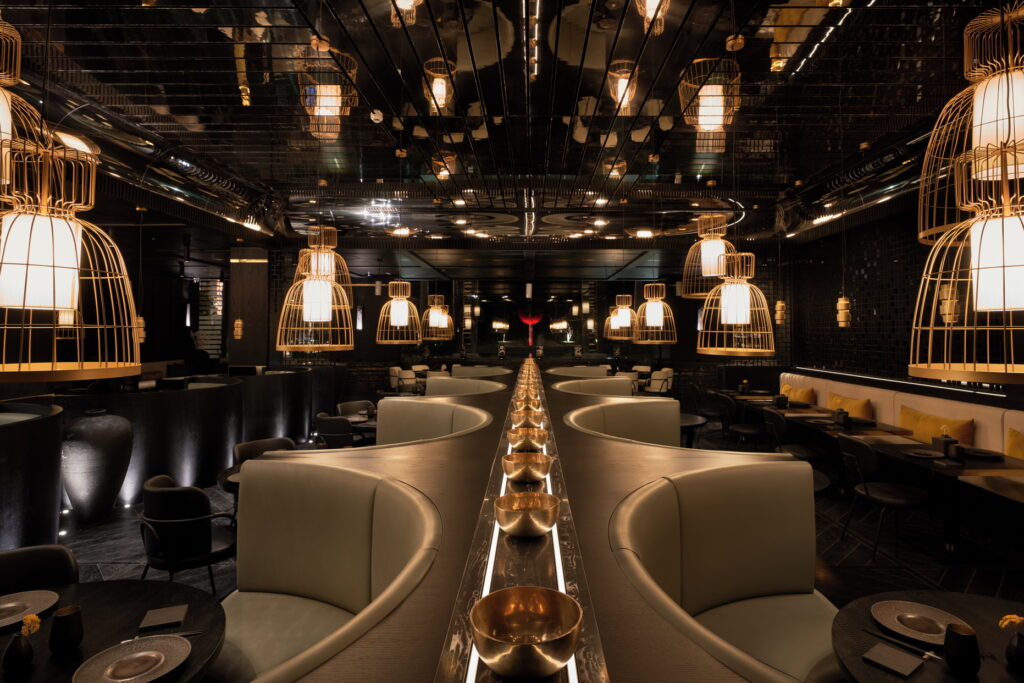
High style
LUX* Grande Baie embodies the essence of LUX* Resorts proposition, ‘A Life Extraordinary’ by effortlessly weaving together intimate, personal or experiential moments with flashes of modern innovation. The resort’s exquisite design by Mauritian architect Jean Francois Adam, and interior maven Kelly Hoppen, injects a new palette of darker base colours, overlayed with lush tropical green, natural wood and linens. This is modern, dark, clean, simple but layered, Zen meets Armani – and a far cry from the typical dark wood Mauritian beams and cream palette that made the island a dream stopover in the last few decades.
Hoppen’s illustrious history with the LUX* brand dates back a decade, when she collaborated on the transformation of the iconic LUX* Belle Mare.
Across 116 LUX* suites, villas and penthouses, she has artfully blended the island’s natural elements with modern design, creating a space that exudes tranquility and sophistication. Luxurious textures and subtle tones complement the breathtaking sea views that greet guests at every turn, instilling a sense of serenity and connection with nature.

Gastronomy
Beach Rouge beach club and restaurant, Bisou rooftop for sunset aperitivo and tapas, or the glamorous AiKisu for Asian gastronomy, almost compete with each other for your attention, time and taste buds.
Beach Rouge is pure class with red and white-striped loungers, bar service, swishing palms and unlimited ocean views claiming the laid-back, uber-cool prize. The 1190 square-metre rooftop uber restaurant, Bisou, is built for Instagram, a sanctuary of idle cabanas and palm leaves, and an arched rim-flow pool that gazes longingly at the ocean.
AiKisu restaurant stands out as a scene stealer. This avant-garde eatery embraces a fusion of Japanese and Peruvian cuisines, delighting gourmands with innovative dishes that play with texture and taste. From the delicate artistry of sushi to the fiery flavours of ceviche, each plate is a masterpiece, a reflection of the restaurant’s commitment to serving gastronomy that knows no bounds.
The weave of wellbeing
The LUX*Me Spa is a journey, as opposed to a traditional spa. For me, the hydrothermal bath journey to harness the healing power of the water element, was unlike anything I had experienced before, taking a journey from a Turkish hammam with heated pool, massaging ice rocks, walking the multi-sensory water path – rainfall, mist, side jets, waterfall, bucket – and Kneipp walk consisting of hot and cold therapeutic foot baths, concluding with an aromatherapy steam and sauna.
Guests can take private and small group sessions across strength and conditioning, HIIT or boxing, join running workshops, and 350m2 of versatile training space with two 30-metre Olympic standard running tracks.
The cycle studio offers riders both instructor-led and virtual on-demand cycling classes, while the Niyama Studio delivers a minimalist and chic mind and body studio for private and small group classes for mat-based pilates, yoga, aerial yoga, meditation, restorative stretching, and release work.
If that’s not blowing blown your hair back, there’s a hair salon and barber, a bridal studio, and six treatment rooms with high-tech equipment for better spine alignment, sinus pressure comfort, and specialised beds for Thai and acupressure therapies.

Transformation with vision
LUX Resorts’ remarkable success can be attributed to the visionary leadership of CEO Paul Jones, who fosters a culture of innovation and excellence. I have visited all the properties and this pulses through the spirit of the people and properties. The brand’s expansion in the Indian Ocean, China, and Europe demonstrates its commitment to embracing the changing travel landscape while staying true to its proposition.
This is a competitive marketplace with the leaders jostling for position. Modern, high-tech, high-touch travel is a tightrope walk for brands to carefully and intelligently choose what should be included in their ‘hospitality stack’.
LUX* Grande Baie plays a senior role within the Indian Ocean portfolio, standing out on its own promontory, bravely leading the pack in Mauritius with something that sets the bar for its competitors to chase. Bravo.
If you’re a business and would like to upload a media release, click here.
5 Essential Tools for Mobile Journalism in 2025
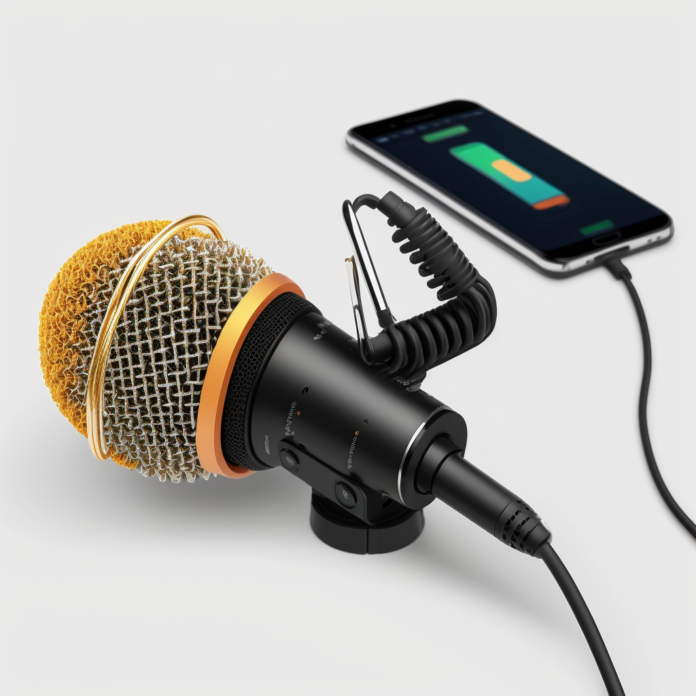
As ever, mobile journalism (MoJo) has become an increasingly important part of the industry. With the advancement of technology, journalists now have access to a range of powerful tools that can be used to capture, edit, and publish high-quality multimedia content on the go. Here are some essential tools for Mobile Journalism:
- Smartphones: The most important tool for MoJo is a smartphone. Modern smartphones are equipped with high-quality cameras, microphones, and video editing software, making them the perfect device for capturing and editing multimedia content. There is a range of smartphones on the market that are ideal for MoJo, including the iPhone 14, Samsung Galaxy S23, and Google Pixel 7.
- Microphones: While smartphones come with built-in microphones, these are often not sufficient for high-quality audio recording. External microphones are therefore essential for MoJo. There is a range of microphones available that can be used with smartphones, including lapel mics, shotgun mics, and handheld mics. Popular options include the Rode Wireless Go II and the Shure MV88.
- Tripods and stabilisers: To capture steady shots, tripods and stabilisers are essential. There are many tripods and stabilisers available that are designed for use with smartphones, including the Joby GorillaPod Mobile Rig and the DJI Osmo Mobile 4.
- Apps: Some of apps available that can be used to edit and publish multimedia content on the go include Adobe Premiere Rush, iMovie, and FilmoraGo.
- Portable power banks: Finally, MoJo journalists need to be able to keep their devices charged on the go. Portable power banks are essential for this, and there are a range of options available that are compact and lightweight, including the Anker PowerCore Slim 10000 PD and the RavPower Portable Charger.
The tools of mobile journalism have come a long way, and the advancements in technology have made it easier than ever for journalists to create high-quality multimedia content on the go. With the right tools, journalists can capture, edit, and publish content from anywhere in the world, and in 2023, the options for MoJo equipment are only set to improve.
If you’re a business and would like to upload a media release, click here.
Artificial Intelligence in Newsrooms: Empowering Journalism for the Digital Age

Artificial Intelligence (AI) has emerged as a transformative force across various industries, and journalism is no exception. In an era defined by rapidly evolving digital landscapes, AI technologies have the potential to revolutionize newsrooms, enabling journalists to uncover insights, streamline workflows, and enhance storytelling capabilities. To be able to utilise AI properly we need to understand its pros and cons, and where it may be best to use let’s dive in.
Harnessing Data for Enhanced Journalism:
AI empowers newsrooms to leverage vast amounts of data to generate insights and identify emerging trends. By utilizing machine learning algorithms, we are able to analyse data sets, spot patterns, and uncover hidden connections, leading to more comprehensive and impactful reporting. AI-driven tools can enable journalists to sift through mountains of information efficiently, assisting in fact-checking, verifying sources, and delivering accurate news stories in real-time.
Automating Mundane Tasks:
One of the critical advantages of AI in newsrooms is the ability to automate repetitive and time-consuming tasks. Natural Language Processing (NLP) algorithms can assist in generating automated summaries, transcribing interviews, and even writing basic news articles. This automation frees up precious time, allowing journalists to focus on more complex and value-added aspects of journalism, such as investigative reporting and in-depth analysis.
Personalised News Delivery:
AI-driven recommendation systems have transformed the way news is delivered to audiences. By analysing user preferences, browsing behaviour, and social media interactions, news platforms can offer personalised content recommendations. This customisation enhances user experience, increases engagement, and helps combat information overload. Though there are some ethical considerations that must be taken into account to ensure that personalised news does not create echo chambers or reinforce biases.
Enhanced Audience Engagement:
AI tools enable newsrooms to engage with audiences on a deeper level. Chatbots and virtual assistants can interact with users, answering questions, providing tailored news updates, and even offering personalised recommendations. AI-powered sentiment analysis helps gauge audience reactions and sentiments toward news stories, enabling journalists to understand public opinion and tailor their reporting accordingly. This further can help journalists save time by knowing what to write about and what not to write about.
Ethical Considerations and Challenges:
While AI presents numerous opportunities for newsrooms, it also raises ethical concerns. Bias in algorithms, data privacy, and the potential for AI-generated deepfake content are among the challenges that need careful attention. Beyond this there is the general ethical concern about AI generation in that it may be to an extent plagiarising from external sources or copying art in the context of image generation. Journalists must be mindful of the limitations and potential risks associated with AI technologies, ensuring transparency, accountability, and responsible use throughout the news production process.
Journalism’s Human Touch:
Despite the advancements in AI, the human element remains irreplaceable in journalism, without the human touch everything does end up reading the same. AI technologies need to be viewed as supplementation tools rather than replacement tools – even from the get-go AI generation isn’t able to magically think up something to write about, it still requires human prompts. Our unique skills of critical thinking, contextual understanding, and empathetic storytelling play a crucial role in maintaining the integrity and credibility of news reporting and facilitating further connection with audiences.
The conclusion is of course predictable but nevertheless ought to be stated. At the end of the day, AI tools are just that, tools to be used to make lives easier, but they shouldn’t replace journalists entirely. Especially when we weigh up the potential ethical considerations requiring human input. Use the tools don’t let them use you.
If you’re a business and would like to upload a media release, click here.