
Home Blog Page 7

Pinterest: The Powerful Content Curation Tool You’re Not Using

0

Pinterest has been a popular platform for visual discovery and inspiration for over a decade, and it continues to be a valuable tool for businesses and creators to showcase their products and services. With the rise of visual marketing and e-commerce, Pinterest has become even more relevant in 2023 as a powerful content tool.

One of the most significant updates to Pinterest in 2023 is the introduction of augmented reality (AR) technology. AR allows users to see how products will look in their space before making a purchase, providing a more immersive shopping experience. This feature has been particularly beneficial for home decor, fashion, and beauty brands, as it enables customers to visualise how items will fit into their homes and wardrobes.

Another development in Pinterest’s functionality is the expansion of video content. Previously, Pinterest was primarily a platform for static images, but it has since evolved to include video content as well. Businesses and creators can now upload and share videos on the platform, making it easier to showcase products, services, and tutorials in a more engaging format. Additionally, Pinterest’s algorithm favors video content, making it more likely to appear in users’ feeds.

Pinterest has also become a more personalised experience for users in 2023. The platform’s algorithm now takes into account a user’s search history, interests, and previous engagement on the platform to curate a more tailored feed of content. This means that businesses and creators can reach their target audience more effectively by using relevant keywords and hashtags.

Furthermore, Pinterest has introduced new tools for businesses to track and measure their success on the platform. The analytics dashboard now includes metrics such as engagement rates, click-through rates, and conversion rates, allowing businesses to track the performance of their content and optimise their strategy accordingly.

Pinterest remains a powerful content tool in 2023, and its evolution has made it even more valuable for businesses and creators. With the introduction of AR technology, expanded video content, personalised user experiences, and improved analytics tools, Pinterest continues to be an essential platform for businesses looking to showcase their products and services and connect with their target audience.

If you’re a business and would like to upload a media release, click here.

Here’s how to get started with data journalism

0

This article was published on gijn.org by Nils Mulvad & Helena Bengtsson in 2015 and updated in 2023 by our team

1. Begin with Small Projects – and Excel

When it comes to data journalism, it’s important to start small and use tools you are comfortable with. Excel remains a vital tool in data journalism, as it allows you to import and export data, clean, sort, and structure it before importing it into other tools. So, it’s essential to get comfortable with the basics before moving on to more advanced tools.

2. Learn the Tools of Journalists

As a data journalist, it’s important to understand the principles of calculating tools. If possible, it’s best to learn from a journalist who is experienced in this field, as they can help you relate specific functions to journalistic tasks.

3. Check, and Check and Check for Errors

Always assume that there will be errors in the data, even if you obtain it from a reliable source. It’s your responsibility to eliminate errors before presenting the data to the audience. Check totals, ensure that everything is included, and if you find any errors, go back and fix them.

4. Make Public Documentation of your Data-Work

When working with data, it’s important to document every step you take so others can follow your process and check your work. Sharing your data work with sources before publishing is also recommended as it helps in checking errors, agreeing on methods, and avoiding errors and criticisms of methods, which could take away from the discussion on content.

5. Use Errors to Get Better Internal Sources

When you discover errors in the data, use them as an opportunity to build better relationships with the people who work with data at the institutions or authorities that provided the data.

6. Get the Data

There are various ways to obtain data, including asking for it, downloading it from the web, scraping it, or making a Freedom Of Information request. Whatever method you choose, it’s important to develop and refine these methods just as you would with interviews, as they are journalistic methods.

7. Analyse the Data – Go for Stories

Data journalism should focus on telling stories. Analyse the data, find the stories within it, and tell them one by one. Use interactive graphics to break down each story into a clear and easy-to-understand format. Avoid mixing multiple angles and topics into long reads that could confuse the audience.

8. What Are Really the Story – Using Extremes

To find stories within the data, think deeply and check them against reality. The best way to describe stories is by using extremes. Use ranking as a tool to find errors and explain reality.

9. Data Journalism Sometimes Starts With the Story – and Sometimes with the Data

There is no right or wrong way to approach data journalism. Sometimes you start with a story and find data to support it, while other times you dive into the data to discover potential stories and then verify their accuracy.

10. Make Data-Cleaning Yourself

When there is no data available, structuring your own dataset might be the only way to create an incredible story. Don’t shy away from the hard work of data cleaning, as it gives you a better understanding of the data and potential stories hidden within it.

11. Get Rid of the Numbers

Data journalism should always focus on the human stories behind the data. If the numbers are overwhelming, focus on finding the humans who can best exemplify the data. Sometimes, zero numbers are the best way to tell a data journalism story. You can include the data in a graphic or keep it for later. If you can’t find humans to explain your findings, then they might be wrong.

12. Work Together and Share

The data journalism community has a long tradition of sharing tools and methods. This is essential to keep up with the speed of development in this field. Sharing is more common in data journalism than in any other area of journalism.

If you’re a business and would like to upload a media release, click here.

How to check plagiarism and sources on articles

0
Image from Grammarly

Checking for plagiarism and verifying the sources in an article or blog post is an important step in ensuring the accuracy and credibility of the information. There are several tools and methods that can be used to check for plagiarism and verify sources.

One popular method for checking for plagiarism is to use an online plagiarism checker. These tools scan an article or blog post against a database of other content on the internet, looking for similarities. Some popular plagiarism checkers include Grammarly, Turnitin, and PlagScan. These tools provide a report that shows where any similarities have been found, making it easy to identify plagiarism.

Another way to check for plagiarism is to manually search for phrases or sentences from the article or blog post using a search engine like Google. By putting the text in quotation marks, the search engine will look for exact matches. This method can be useful for identifying plagiarism that may not have been picked up by an automated tool.

Verifying the sources in an article or blog post is also important. This can be done by reading the sources cited and checking that they are credible and reliable. One way to check the credibility of a source is to see if it is peer-reviewed. Peer-reviewed sources are articles or studies that have been reviewed and evaluated by experts in the field. Another way to check the credibility of a source is to see if it is from a reputable organisation or website. For example, sources from a university or a government agency are generally considered more credible than sources from a personal blog.

It’s important to note that the sources cited should be relevant and reliable, it’s also good to check for the date of the sources, if the source is outdated it will not be that useful for the current facts and information you are looking for.

In addition, it’s good to be aware of the bias of the sources, as sources can have different perspectives and opinions on a certain topic, it’s important to read and understand the sources from multiple perspectives to get a more comprehensive understanding of the topic.

In summary, to check plagiarism and verify sources, you can use online plagiarism checkers, manually search for text using a search engine, read and verify the sources cited, check the credibility of the sources, and be aware of the bias of the sources. By using these methods, you can ensure that the information in an article or blog post is accurate and credible.

If you’re a business and would like to upload a media release, click here.

What is mobile journalism?

0
Mobile Journalism Video

Mobile journalism, also known as “mojo,” is a form of digital journalism that utilizes mobile devices, to gather, produce, and distribute news content. This type of journalism has become increasingly popular in recent years. Especially considering the use of mobile devices has skyrocketed and technology has become more advanced.

Pros:

One of the key advantages of mobile journalism is the ability to report on news in real time. With a smartphone or tablet, journalists can quickly and easily capture video, audio, and images from the field. They can then immediately share them on social media or other online platforms. This allows for a faster and more immediate flow of information to the public. It can also provide a more intimate and authentic perspective on events.

Another advantage of mobile journalism is its cost-effectiveness. Traditional forms of journalism often require expensive equipment and a team of people to produce a story. However, mobile journalism can be done with just a smartphone or tablet. Which in turn makes it accessible to a wider range of journalists and media outlets. Additionally, many mobile journalism tools and apps are free or low-cost, which further reduces the barrier to entry.

Cons

However, there are also some challenges associated with mobile journalism. One of the main concerns is the quality of the content produced. Mobile devices may not have the same capabilities as professional camera equipment. Furthermore, the smaller screens can make it difficult to view or edit videos and images. Additionally, the use of mobile devices in the field can be hindered by poor internet connectivity and battery life.

To overcome these challenges, it’s important for mobile journalists to be well-trained and to use the best tools available. There are a variety of mobile journalism training programs and workshops available, that teach journalists how to use their mobile devices for storytelling. Additionally, new mobile journalism apps and tools are constantly being developed to improve the quality of content, such as video stabilization and audio enhancement.

Mobile journalism is a rapidly growing field that is changing the way news is reported and consumed. The ability to report on news in real time and the cost-effectiveness of mobile devices make it an attractive option for journalists and media outlets. However, it is important for mobile journalists to be well-trained and to use the best tools and apps available to produce high-quality content. With the right training and tools, mobile journalism can provide a powerful and authentic perspective on the world’s events. Thus making it a valuable addition to the media landscape.

If you’re a business and would like to upload a media release, click here.

How to utilise ChatGPT best

0

ChatGPT is an incredible AI language model that can help you with a wide range of tasks, from answering questions and generating content to providing recommendations and insights. Here are some tips on how to utilise ChatGPT best, and what you can expect from this amazing tool.

  1. Be specific with your prompts: ChatGPT works best when you give clear and specific prompts. Make sure your questions are precise and focused on a particular topic. For example, instead of asking “What is the weather like?”, try asking “What is the weather forecast for tomorrow in London?”
  2. Use natural language: ChatGPT is designed to understand natural language, so don’t be afraid to ask questions in a conversational tone. The more natural your prompts are, the better the AI model will understand and respond to them.
  3. Use context: ChatGPT works best when it has context to work with. Provide as much relevant information as possible when asking your questions. For example, if you are asking a question about a specific product, provide the name of the product and any other relevant details.
  4. Be patient: ChatGPT is a powerful tool, but it can take some time to generate responses. Be patient and allow the AI model to process your prompts before expecting a response. In some cases, the AI model may require additional information or clarification, so be prepared to provide this if necessary.
  5. Experiment with different prompts: ChatGPT can generate a wide range of responses, so don’t be afraid to experiment with different prompts to see what works best. Try asking questions in different ways, or ask for recommendations on different topics to see what the AI model can do.

ChatGPT is an incredible tool that can help you with a wide range of tasks. To utilise it best, be specific with your prompts, use natural language, provide context, be patient, and experiment with different prompts. With these tips in mind, you can expect to get the most out of this amazing AI language model.

If you’re a business and would like to upload a media release, click here.

A Digital Guide to Tracking Corruption in 2023

0

Corruption is a pervasive issue that affects all aspects of society, from the government to the private sector. In 2023, technology has made it easier to track and identify corruption. With the rise of digital tools and platforms, it is now possible to monitor corruption in real-time, making it easier to hold those responsible accountable. In this blog post, we will explore the digital guide to tracking corruption in 2023.

  1. Social Media Monitoring

Social media has become a powerful tool for tracking corruption in real-time. Platforms like Twitter, Facebook, and Instagram provide a platform for citizens to report corruption, share evidence, and spread awareness about corrupt activities. Social media monitoring tools like Hootsuite and Mention can help organisations track mentions of corruption-related keywords, enabling them to identify potential cases of corruption.

  1. Data Analysis

Data analysis is another digital tool that can be used to track corruption. Big data analytics can be used to analyse large amounts of data to identify patterns and anomalies that may indicate corruption. This technology can help organisations detect fraud and other forms of corruption in financial data, procurement records, and other areas.

  1. Whistleblower Platforms

Whistleblower platforms have become increasingly popular in recent years. These platforms provide a safe and anonymous way for individuals to report corruption without fear of retaliation. Platforms like SecureDrop, Whistleblower Protection Program, and Reports allow individuals to submit information and evidence about corruption, which can be used to investigate and prosecute those involved.

  1. Blockchain Technology

Blockchain technology has the potential to revolutionise the fight against corruption. This technology can be used to create transparent and tamper-proof records of financial transactions, making it more difficult for corrupt officials to hide their illicit activities. Blockchain can also be used to create secure voting systems, reducing the potential for electoral fraud.

  1. Open Data

Open data initiatives can help increase transparency and accountability in government and other organisations. Open data platforms like Open Data Watch and OpenCorporates provide access to a wide range of data sets, including financial data, procurement records, and public contracts. This data can be used by journalists, civil society organisations, and other stakeholders to identify potential cases of corruption.

The fight against corruption has been made easier with the use of digital tools and platforms. Social media monitoring, data analysis, whistleblower platforms, blockchain technology, and open data initiatives are just a few of the many digital tools available for tracking corruption. By leveraging these tools, organisations and individuals can work together to hold those responsible for corruption accountable and promote transparency and accountability in all aspects of society.

If you’re a business and would like to upload a media release, click here.

Twitter tips from experts

0
Blue bird on speech bubble

Editors note: many of these tips are outdated in 2023.

This post was published on bbc.co.uk/academy/journalism/

@BBCMatthewPrice, chief correspondent @BBCr4today

For me, Twitter style should definitely be informal, chatty and lively, bearing in mind that I’m a BBC journalist and all that entails. How informal can I be? Very, within the bounds of BBC impartiality and independence.

Style and construction also depend on the purpose of the tweet. Promoting content, I’d do a dropped intro style – one that doesn’t give away the main thrust of a piece but does give subject matter and hopefully intrigues.

I often simply ask a question, or find one that’s been asked by a follower and then retweet it, if I want to canvas opinion. But often the style depends too on the nature of the subject: quick, short, punchy facts for rolling news; more considered statements for more analytical content. I find it often generates a lot of interest if I can tweet lines from a particularly interesting interview.

Remember, people want to see things. The best tweets usually include photos, videos and links. The Costa Concordia, for instance, was a must-photo story. As was this migrant rescue.

Inevitably there are pitfalls. Tweeting too much of one side of the argument, even with the ‘not my views’ caveat, can build up an impression that some followers will then attach to you. When you shorten an argument too much, to within 140 characters, you can write something that can be misconstrued. It’s worth being aware of that. See, for instance, the reaction to this tweet from May 2014.

And sometimes you need to engage with critics to explain yourself better, as in this exchange where people were fed up with me for photographing relatives of the MH17 victims.

@annadoble, the assistant editor, learning online @BBCNewsbeat

There are many ways to write a bad tweet. Using too many hashtags drowns your message at birth. Writing clickbait questions annoys your audience. Trying to make too many points in 140 characters lands you in a swamp of abbreviated gibberish.

There’s probably no such thing as the perfect tweet because it all depends on who you are trying to talk to and what you want from them. That said, here are five good rules to follow:

  •     Make one point. Make the most of the strongest fact/stat you have
  •     Avoid clutter. Use as little punctuation as possible and use specific hashtags, not speculative ones. For example, for events and known discussion points, check what’s trending.
    Emojis are getting into lots of tweets.  They’re fine and can be funny/cute, but it can get a bit tedious if they’re in every tweet
  •     Pictures: attaching a good image or graphic can really raise engagement, but only if you’ve got a good one or a behind-the-scenes image that’s exclusive to you (no bland stock images here, please)
  •     Timing: think about what your audience is doing; make sure your tweet chimes with their routines and doesn’t demand too much of them. If you want responses, keep it simple; don’t confuse them by asking for lengthy hashtags
  •     Be funny. It’s not always appropriate with news but social media is not called ‘social’ for nothing. We communicate best when we are friendly and funny.

And don’t forget there are loads of useful tools to give you a better sense of what worked and what didn’t work with your chosen Twitter audience. The three free ones I’d recommend are:

  •     TweetDeck for scheduling tweets and monitoring lists
  •     Bitly for seeing your click-through rates and which tweets made people want to know more (just add a + to the end of any Bitly link URL to see how your link performed)
  •     Twitter itself – check out your analytics tab to see which tweets reached the widest audience and which links were the most clicked. Think about (and save) the ones which did well: it will help shape the success of your future tweets. Warning: if you have a nerdy side this can soon get *very* addictive.

@suellewellyn, journalist and social media trainer

DO:

  •     Be helpful, open, honest and authentic. Social networks are just that – social
  •     Share interesting content – links to good stories, photos and videos; tweet and retweet regularly. Share exclusives and ‘news you can use’. Add insight and comment
  •     Give credit where credit is due when retweeting, and acknowledge the original creator or source.

DON’T:

  •     Just broadcast – no one wants to see one-way traffic. Your tweet stream should include a mix of links, conversations and retweets. Think dialogue not monologue
  •     Retweet something without reading it first. Is it accurate or unsubstantiated and offensive? Remember, a retweet could be seen as an endorsement
  •     Try to cover a mistake by deleting the tweet without explanation. Be transparent and, if you slip up, own up and apologise.

@mightyscoop, social media producer @BBCSport

  • Choose the right tone for your show/audience. If people feel you’re talking at them rather than to them, you’re likely to alienate people rather than involve them in a conversation.
  • The same goes if you speak to them in too formal or informal a way. Use humour at the right time, but know when to be serious.
  • Use a photo whenever you can – pictures average a 35% boost in retweets. They stand out, catch the eye and are instantly more shareable.
  • Engage your audience by giving them something to do – for example, ask them to reply with their own thoughts/read this/click here for more.

Read the rest of the expert tips here

If you’re a business and would like to upload a media release, click here.

How is AI affecting journalists?

0

AI technology is rapidly advancing and changing the way journalists work. Here’s how AI is impacting the field of journalism:

  1. Streamlining content creation: AI technology, such as advanced language models like ChatGPT, can help journalists to generate summaries, headlines, and even entire articles. This can save journalists time and effort, allowing them to focus on more important tasks such as investigative journalism and fact-checking.
  2. Enhancing fact-checking: AI technology can assist journalists in fact-checking by quickly generating summaries of articles and identifying key pieces of information. This can help journalists quickly verify the accuracy of the information and ensure that their stories are factually correct.
  3. Personalising news content: AI technology can also be used to personalise news content for individual readers. By analysing a reader’s browsing history, interests, and demographics, AI can generate personalised news stories that are tailored to the reader’s preferences. This can increase engagement and readership, as well as improve the overall user experience.
  4. Automating repetitive tasks: AI technology can automate repetitive tasks that journalists would otherwise need to do manually, such as transcribing interviews, summarising long reports, or writing headlines for news stories. This can free up journalists to focus on more important tasks such as investigative journalism and fact-checking.
  5. Generating automated news: AI technology can also be used to generate news stories automatically, which can be useful for covering repetitive or routine events such as sports scores, stock market updates, or weather forecasts. This can free up journalists to cover more complex and important stories that require more in-depth reporting.

AI technology of course has the potential to greatly benefit the field of journalism. That being said it is important to use the technology responsibly and to be aware of potential ethical concerns.

If you’re a business and would like to upload a media release, click here.

How will ChatGPT impact journalism?

0

ChatGPT and other advanced language models have the potential to significantly impact the field of journalism in several ways. Some are to great benefit,

  1. Content creation: ChatGPT can assist journalists in the creation of written content by generating summaries, headlines, and even entire articles. This technology can save journalists time and effort, allowing them to focus on more important tasks such as investigative journalism and fact-checking. Additionally, ChatGPT can help to improve the efficiency and productivity of newsrooms.
  2. Fact-checking: ChatGPT can assist in fact-checking by quickly generating summaries of articles and identifying key pieces of information. This can help journalists quickly verify the accuracy of the information and ensure that their stories are factually correct.
  3. Personalisation: ChatGPT can also be used to personalise news content for individual readers. By analysing a reader’s browsing history, interests, and demographics, the technology can generate personalised news stories that are tailored to the reader’s preferences. This can help to increase engagement and readership, as well as improve the overall user experience.
  4. Automation of repetitive tasks: ChatGPT can automate repetitive tasks that journalists would otherwise need to do manually, such as transcribing interviews, summarising long reports, or writing headlines for news stories. This can allow journalists to focus on more important tasks such as investigative journalism and fact-checking, and also can be useful for smaller newsrooms where resources are limited.
  5. Automated news generation: ChatGPT can also be used to generate news stories automatically, which can be useful for covering repetitive or routine events such as sports scores, stock market updates, or weather forecasts. This can free up journalists to cover more complex and important stories that require more in-depth reporting.

On the other hand, the use of AI in journalism also raises some ethical concerns:

  • There’s a risk of misinformation spreading through the use of AI-generated content.
  • The use of advanced language models like ChatGPT could lead to job loss for journalists as the technology becomes more prevalent.
  • The automation of news generation could lead to a loss of human perspective and a lack of diversity in the stories that are covered.

ChatGPT and other advanced language models, therefore, have the potential to greatly benefit the field of journalism. They can assist with content creation, fact-checking, personalisation, and automation of repetitive tasks. However, it is important for journalists to be aware of the potential ethical concerns and to use the technology responsibly. It’s important to note that this technology should be used as a tool to assist, but not replace human journalists. This is to ensure that the news remains accurate, diverse and with a human perspective.

If you’re a business and would like to upload a media release, click here.

A journalist’s guide to reporting research findings

0

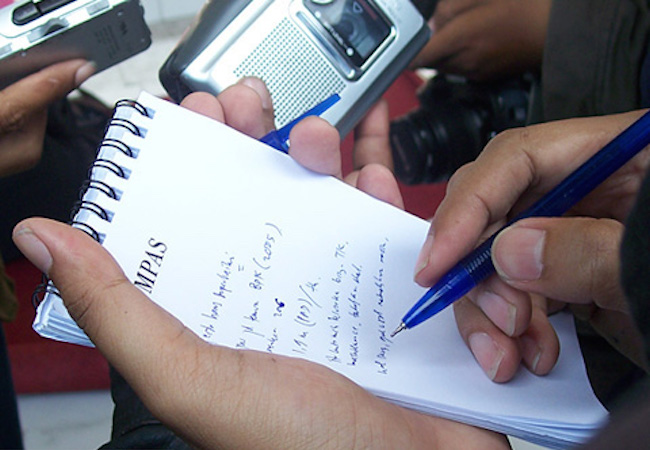
PHOTO: Yan Arief Purwanto on Flickr.  Some rights reserved

As a journalist, reporting on research findings is a critical part of the job. Whether it’s a scientific study or a market research survey, reporting on research can be a powerful way to inform the public and provide valuable insights into important topics. However, it can also be a daunting task, especially for those who may not have a background in the specific field of study. In this guide, we’ll provide some tips on how to effectively report on research findings as a journalist.

  1. Understand the basics: Before diving into a research report, it’s important to have a basic understanding of the topic and the methodology used in the study. Take the time to familiarize yourself with any relevant terminology or concepts, and review the methodology section of the report to understand how the study was conducted.
  2. Consider the source: Not all research studies are created equal. Be sure to consider the source of the study, and whether or not it has any potential biases or conflicts of interest. It’s also important to review the sample size and methodology used in the study, as well as any limitations or weaknesses that may impact the findings.
  3. Interpret the data: When reporting on research findings, it’s important to accurately interpret the data presented in the report. Avoid oversimplifying or misrepresenting the data, and take the time to fully understand what the findings mean. It may also be helpful to consult with experts in the field to ensure that your interpretation is accurate.
  4. Provide context: Reporting on research findings can be more impactful when the data is placed in context. Consider how the findings fit into larger trends or issues, and provide relevant background information to help readers fully understand the significance of the research.
  5. Avoid sensationalising: While it can be tempting to focus on the most attention-grabbing findings, it’s important to avoid sensationalizing the data. Stick to the facts, and be transparent about any limitations or potential biases in the study.
  6. Be transparent: When reporting on research findings, be transparent about the methodology used in the study, as well as any limitations or potential biases. This can help readers better understand the scope and relevance of the findings, and build trust in your reporting.

Reporting on research findings can be a challenging but rewarding task for journalists. By taking the time to understand the basics, consider the source, interpret the data accurately, provide context, avoid sensationalizing, and be transparent, you can effectively report on research findings and provide valuable insights to your audience.

If you’re a business and would like to upload a media release, click here.